


Brand consistency sounds simple until you’re the person trying to manage it across signs, apparel, packaging, event displays, promotional items, print, and everything else your customers encounter.
The logo looks right on the website, but the blue comes out differently on a banner. The sales team orders one version of a brochure, HR orders apparel from another vendor, and a local office replaces a sign using an old file someone found in a shared folder.
None of those decisions seem huge on their own. Together, they can make a brand feel less polished than it actually is.
For businesses across Washington, keeping a brand consistent is less about making everything look identical and more about making sure every touchpoint still feels connected.
Give Your Brand Enough Structure to Travel
A good brand has to work in more places than a presentation deck. It needs to hold up on a storefront, a trade show display, a polo shirt, a package, a vehicle, a promotional item, and whatever your team decides to create next.
That is why basic brand standards matter. Your team should know:
- Which logo versions are approved — and when to use each
- How colors should be handled — the right values for print, screen, and specialty production
- What typography to use — and acceptable substitutes when a font can’t travel
- Where there is room to adapt — so the brand bends without breaking
The key word is adapt. A logo that works perfectly on a brochure may need to be simplified for embroidery. A message that works on a package may be too long for a sign someone sees from the road. Consistency comes from keeping the core brand recognizable—not forcing the exact same design everywhere.
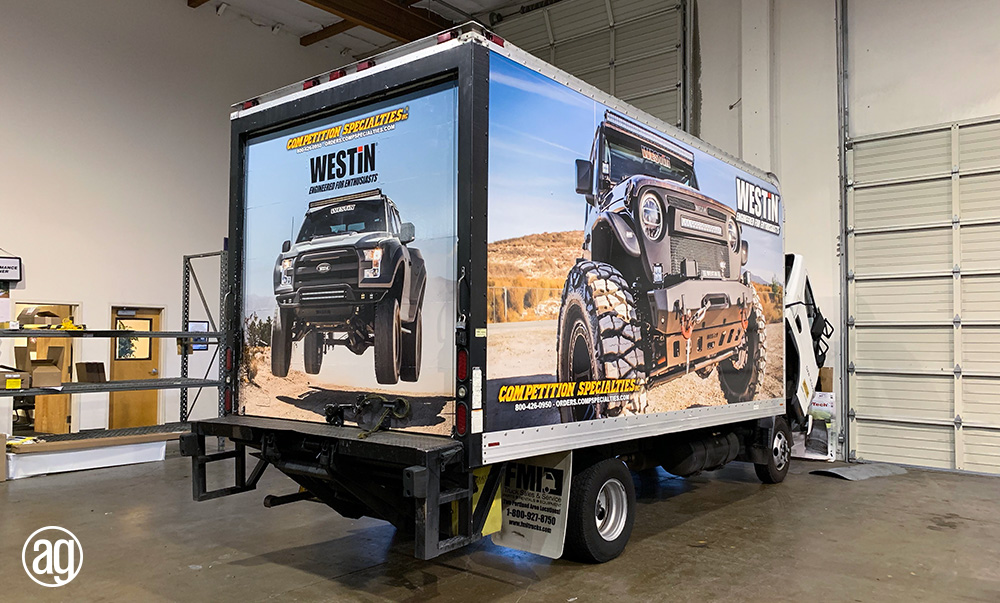
The same brand has to hold up everywhere it travels—including at 60 mph on the freeway.
Think About Where the Piece Will Actually Live
Before approving any branded material, look beyond the design file. Where will people see it? How far away will they be? How long will they have to look at it? What material is it being produced on?
Those questions matter.
A trade show backdrop has to communicate quickly across a busy room. Building signage needs to work from a distance. Apparel has to look good while someone is moving around. Packaging may be handled up close and needs to feel intentional from every angle.
The more you design for the real environment, the more natural the brand feels.
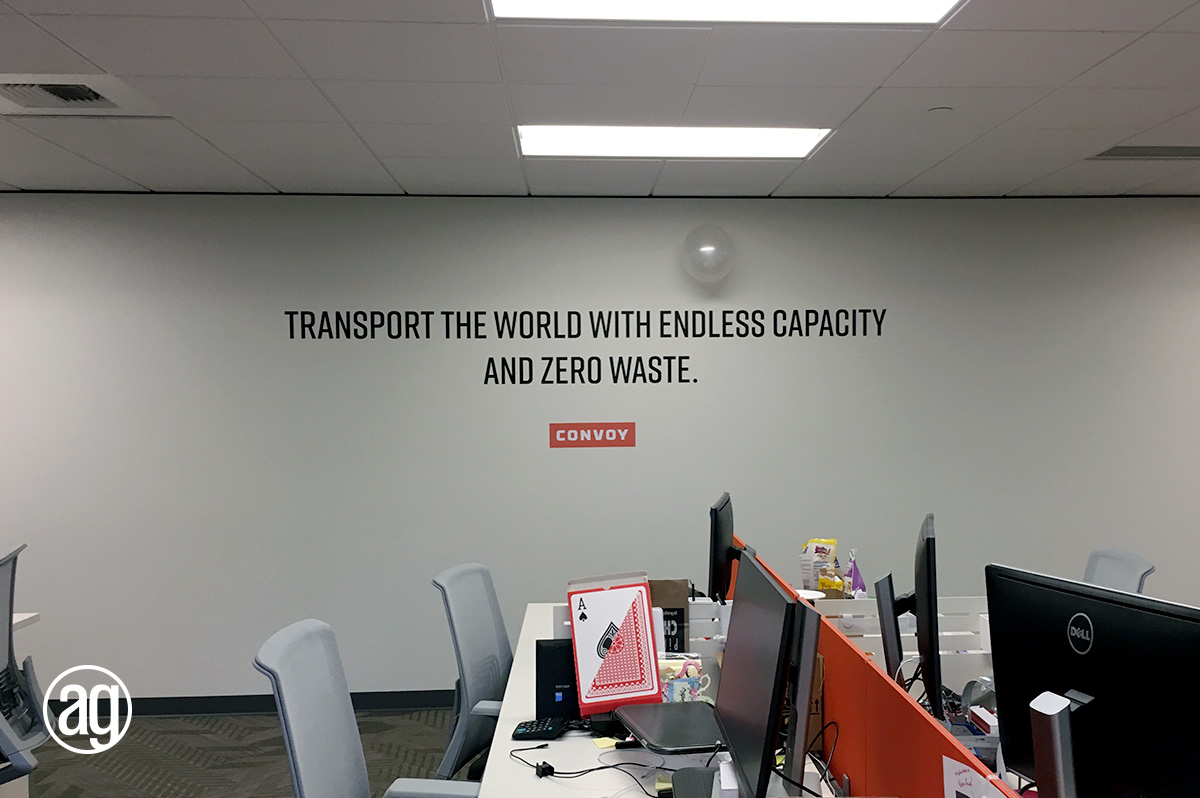
Designed for the space it lives in—environmental graphics that read clearly in context, not just on screen.
Watch for Vendor Creep
This is where things usually get complicated.
One vendor handles signs. Another does apparel. Someone else produces promotional products. Packaging goes somewhere different. Then there is a printer, an event display supplier, a mail house, and whatever vendor the local office used last year.
Before long, your marketing team is spending a surprising amount of time sending files, explaining brand standards, chasing proofs, comparing colors, checking timelines, and figuring out who is responsible for what.
That is not just inconvenient. It creates more opportunities for inconsistency.
Working with one partner across more of your physical marketing needs can make a big difference. The brand does not have to be reintroduced every time a new project starts, and your team spends less time coordinating the production behind the campaign.
Make Reordering Easy
Not every project should feel like a new project.
If your team regularly orders event materials, signs, employee apparel, promotional items, packaging, sales materials, or other branded pieces, keep a record of what was approved. That could mean saved specifications, current artwork, material choices, sizing, finished samples, or a simple ordering system that makes it easy to repeat what already works.
This becomes even more useful for organizations with multiple locations across Washington. A team in Seattle should not have to guess what another office in Tacoma, Spokane, or Bellevue ordered six months earlier.
The easier it is to repeat the right thing, the less likely the brand is to drift.

Branded apparel and promo are reorder-heavy—save the specs once and repeat what already works.
Look at Everything Together Once in a While
One of the simplest ways to spot brand inconsistencies is to stop reviewing everything one project at a time.
Put it all in one place. Look at your signage next to your apparel. Put packaging beside event materials. Compare promotional items, printed pieces, displays, and anything else a customer might encounter.
Then ask one question:
Does this all feel like the same brand?
You will usually notice problems pretty quickly. Maybe one piece feels dated. Maybe the colors are drifting. Maybe one department is using a different logo version. Maybe the quality is inconsistent from one item to the next. Those are much easier to fix when you can see the full picture.
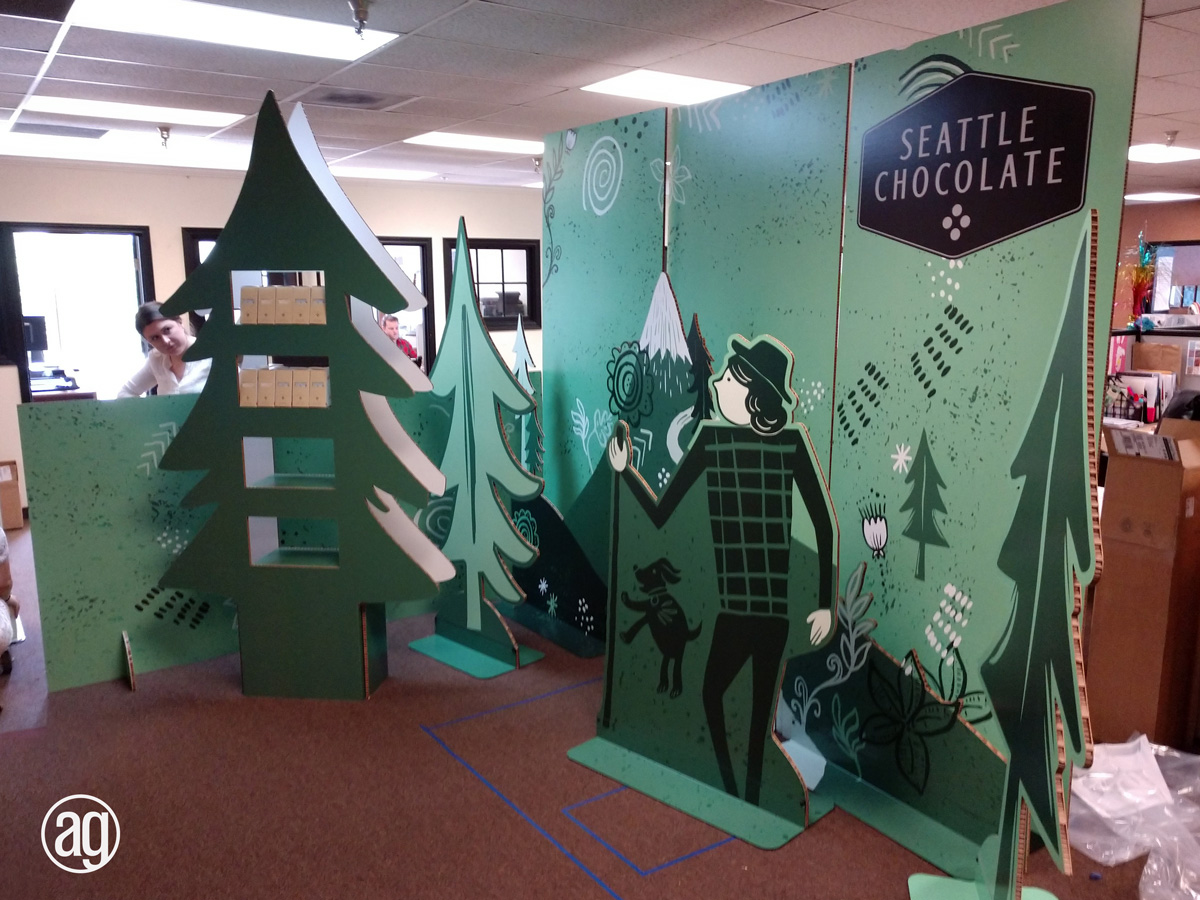
Seen side by side, a cohesive brand is obvious—and so is anything that has drifted.
Your Brand Consistency Checklist at a Glance
Use this quick list the next time you’re reviewing branded materials or briefing a new project:
- Approved brand standards — logos, colors, and typography your whole team can reference
- Room to adapt — guidance for embroidery, small formats, and specialty production
- Designed for the environment — distance, lighting, material, and how long people look
- Fewer vendors — consolidate production so the brand isn’t reintroduced every time
- Easy reordering — saved specs, artwork, and samples for repeat pieces
- Multi-location consistency — offices don’t have to guess what others ordered
- Regular side-by-side review — look at everything together to catch drift early
Consistency Should Make Marketing Easier, Not Harder
Managing a brand across dozens of physical touchpoints takes coordination, but it should not require your team to become production experts.
At AlphaGraphics Seattle, we help businesses across Washington bring more of those needs together in one place—signs, displays, apparel, promotional items, packaging, print, and other branded materials. More importantly, it means your team has one partner that already understands the brand, the standards, and how the pieces are supposed to work together.
Fewer vendors. Fewer handoffs. Less time spent explaining the same thing over and over. And a brand that still feels like your brand everywhere it shows up.
Brand Consistency FAQs
What is brand consistency?
Brand consistency means every place a customer encounters your brand—signs, apparel, packaging, print, promotional items, vehicles, and displays—still feels connected. It’s not about making everything identical; it’s about keeping the core brand recognizable while allowing each piece to adapt to how it’s produced and where it’s seen.
What should brand standards include?
At minimum, your approved logo versions, how colors should be handled across print and screen, the typography to use (and acceptable substitutes), and clear guidance on where there’s room to adapt—for example, simplifying a logo for embroidery or shortening a message for signage.
Why does my logo color look different on different materials?
Color can shift between screens, printing processes, and materials like fabric, vinyl, or coated stock. Documenting the correct color values for each production method—and working with a partner who color-manages your jobs—keeps your brand looking the same from a business card to a building sign.
How do I keep branding consistent across multiple locations?
Keep a record of what was approved—specifications, current artwork, materials, sizing, and samples—and make reordering simple. When offices in Seattle, Tacoma, Spokane, or Bellevue can repeat exactly what was approved, the brand is far less likely to drift.
Does using fewer vendors really help brand consistency?
Yes. Every added vendor is another handoff where files, colors, and standards can get lost. Consolidating more of your physical marketing with one partner means the brand doesn’t have to be reintroduced for every project, and your team spends less time coordinating production.
Where can I get consistent branded materials produced in Seattle?
AlphaGraphics Seattle produces signs, displays, apparel, promotional items, packaging, and print for businesses throughout Washington—so more of your branded touchpoints come from one partner who already knows your standards.